Bedroom Design & Furniture Guide
What to Know Before Choosing a Vermont Shaker Four-Poster
A four-poster bed makes a room feel considered before you add a single pillow. In a Shaker-inspired design, that presence comes from proportion, honest materials and beautifully restrained detail—not elaborate carving. Here’s how to weigh the look against the realities of room size, ceiling height and everyday use.
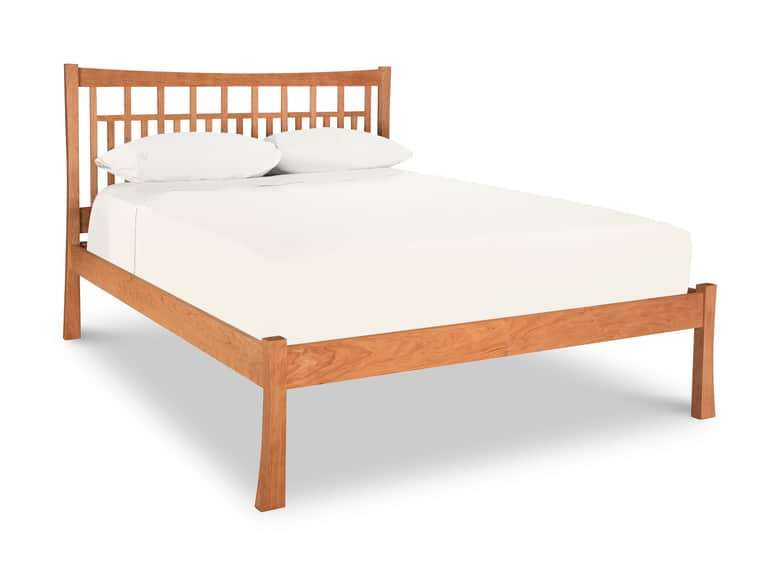
There are beds that blend quietly into the background, and beds that seem to give the whole room its point of view. A four-poster belongs to the second group. Its upright posts frame the mattress, draw the eye upward and create a strong architectural outline, even when the design itself is simple. That balance makes a Shaker-inspired four-poster especially appealing: it can feel traditional without looking fussy, substantial without overwhelming a bedroom.
The word “Shaker” is often used to describe a design language associated with clean lines, practical construction and minimal ornament. A contemporary Shaker-inspired bed may borrow those qualities without making a claim about historical origin or exact period construction. When considering Vermont Furniture Designs, look beyond the name or overall impression. Ask what the specific frame is made from, how it is joined and finished, what dimensions it occupies, and how its details work in your home.
The goal is not simply to find a bed that looks impressive in a photograph. It is to choose a frame that suits your room, supports the mattress arrangement you have, and feels comfortable to live with over time. A little measuring and a few direct questions can make the difference between a dramatic centerpiece and an impractical purchase.
Why a Shaker-Inspired Four-Poster Stands Out
The classic four-poster silhouette is easy to recognize: a post rises from each corner of the bed, defining a vertical frame around the sleeping area. Depending on the design, the posts may connect at the top or remain separate. Some frames are tall and stately; others keep the posts lower and the outline more understated. Even without fabric or a canopy, those four vertical elements give the bed a sense of structure.
Shaker-inspired styling tends to make that structure the star. Rather than relying on ornamental carving, glossy embellishments or elaborate curves, it often emphasizes the shape of the wood, the clarity of the joinery and the rhythm of repeated lines. That restraint can be an advantage in a bedroom, where visual calm matters. It also gives the bed flexibility: layered bedding, patterned curtains or a colorful rug can change the mood without competing with a highly decorated frame.
Still, “simple” does not mean visually neutral. Four posts create a prominent outline, and a large wooden frame carries real visual weight. Before falling for the romance of the silhouette, consider how that shape will relate to the other substantial elements in the room: windows, wardrobes, bedside tables and ceiling fixtures. The best result feels intentional rather than crowded.
Start With the Room, Not the Finish
A four-poster can look surprisingly different from one bedroom to another. In a generous room with high ceilings, tall posts may emphasize the architecture and give the bed a gracious, grounded presence. In a smaller room, the same frame might dominate the view, block sightlines or make the ceiling seem lower. Neither outcome is automatic; the dimensions and placement determine how the bed reads.
Measure the room before you compare finishes. Note its length and width, ceiling height, doorway openings, window locations and any fixed obstacles such as radiators or built-in storage. Then mark the intended bed footprint on the floor with painter’s tape or a similar removable guide. Include the space needed to walk around the frame, open drawers and reach bedside surfaces. A bed that fits on paper can still make daily movement awkward if there is too little clearance at its sides or foot.
- Check the full footprint: The outside dimensions of the frame can exceed the mattress size. Confirm both measurements, not just the familiar mattress category.
- Map the route in: Measure hallways, stair turns, doorways and the bedroom entrance. A large frame may arrive in sections, but that should be confirmed rather than assumed.
- Look overhead: Account for ceiling fans, pendant lights, sloped ceilings and other fixtures near the posts or any top rails.
- Protect circulation: Leave enough room to make the bed, move comfortably and use drawers or doors without repeatedly bumping into the frame.
A floor plan helps, but a simple full-scale outline can reveal details a drawing misses. Stand where you normally enter the room and consider the first view. If a tall post would sit directly in front of a window or visually interrupt the doorway, shifting the bed may improve the composition. The frame should anchor the room, not make it feel like an obstacle course.
Proportions Matter as Much as Height
Height gets much of the attention with a four-poster, but it is only one part of proportion. The thickness of the posts, width of the rails, height of the headboard and distance between the mattress and any connecting rails all affect the overall impression. A tall, slender post can feel elegant; a thicker one may look sturdy and grounded. Either can suit a Shaker-inspired room, provided the elements feel balanced with the mattress and the space.
Ask for a dimensioned drawing or a complete specification sheet for the particular frame you are considering. Look for total height, overall length and width, mattress opening, rail height, under-bed clearance and any overhead components. If a canopy or upper rails are part of the design, check their measurements carefully. Don’t rely on a general description such as “queen size” or “king size” to tell you how much floor area the assembled frame will occupy.
It can help to compare the proposed height with the room itself. A tall post near a low ceiling may feel compressed, while very low posts in a room with substantial vertical space may appear lost. Consider existing furniture, too. A high headboard beside modest nightstands can create a dramatic contrast; a bulky headboard beside tall wardrobes may create too many competing vertical shapes.
Think about the mattress and bedding as part of the finished proportion. A deep mattress, topper and layered duvet raise the sleeping surface, changing the relationship between the bed and its rails. Pillow height and the way bedding drapes can also soften or obscure the frame. Ask how the manufacturer defines the mattress opening and whether the intended mattress depth is compatible with the design.
Look Closely at Construction and Finish
A frame’s appearance tells only part of its story. Solid wood, engineered components and mixed-material construction can each be used in furniture, but the materials, joinery and design details should be clearly described. If a particular Vermont Furniture Designs frame appeals to you, request information about the wood species, construction method, finish, care instructions and any differences between standard and optional specifications. Avoid assuming that every frame from a maker uses the same materials or methods.
Joinery deserves attention because a bed experiences repeated movement and load. Ask how the rails connect to the posts, whether the center of the frame receives support, and what hardware is used. The answers should be specific enough to help you understand how the bed is assembled and maintained. If the frame is made to order or has custom options, confirm which construction details change and which remain standard.
Finish affects both appearance and care. An oil finish, for example, may highlight the character of wood differently from a painted or film-forming finish, but the exact look and maintenance depend on the product. Request a sample if available, and view it in the light conditions of your bedroom. Wood color can shift noticeably between a bright showroom, a warm evening lamp and a north-facing room.
Ask practical questions as well: How should the surface be cleaned? Can minor wear be refreshed? What should be kept away from the finish? Is the color expected to vary with the natural grain? Clear care instructions help set realistic expectations. A handcrafted or natural-material look often includes variation, and understanding what is considered normal before ordering makes the final piece easier to appreciate.
Plan for Mattress Support and Everyday Comfort
A beautiful frame still has a job to do. Confirm whether the design is intended for a foundation, a box spring, a mattress alone or a specified support system. Some beds use slats; others require a separate foundation. The appropriate setup depends on the frame and mattress, so check both manufacturers’ guidance rather than guessing.
Find out whether a center rail and additional legs are included, especially for wider mattress sizes. Ask about slat spacing and weight limits where those details are provided. If you use an adjustable base, verify compatibility directly. A traditional four-poster frame may not accommodate every base, and the posts or rails can affect access, clearance and movement. Never assume that a mattress or base will fit simply because its nominal size matches the bed.
Comfort includes the small routines around sleep. Consider whether the frame’s height makes it easy for everyone who will use it to get in and out of bed. Check whether the posts interfere with bedside lamps, charging cords or a preferred reading position. If you make the bed by lifting a duvet over the sides, notice whether the rails leave enough space for that familiar task.
A Canopy Is an Option, Not an Obligation
The phrase “four-poster” can bring to mind fabric panels, curtains and a canopy overhead, but a frame does not need any of those extras to make an impression. A clean, open silhouette may be exactly right for someone who wants architectural character without adding more fabric or visual layers. If a design includes an upper structure, consider how it changes the room’s scale and how it will be cleaned.
Fabric can soften the lines and add privacy or a more enveloping feeling, but it also changes light, airflow and maintenance. Before planning curtains, confirm how they can be attached and whether the structure is designed to carry them. Consider dusting, laundering and how the fabric will behave near windows, lamps or a ceiling fan. A decorative idea is most successful when it works with the practical life of the room.
Make the Frame Part of a Restful Room
Because a four-poster naturally attracts attention, the rest of the bedroom can be edited rather than added to. A restrained bed frame often works well with quiet bedding, but “quiet” need not mean plain. Percale can bring a crisp, breathable feel; linen adds a relaxed texture; a quilt or woven blanket can introduce pattern without making the bed look busy. The most successful combination reflects how you like to sleep as well as the colors and textures you enjoy.
Lighting is another important companion. Bedside lights should be easy to reach and positioned so that posts do not cast distracting shadows or block the beam. A ceiling fixture should have enough clearance from the frame, and its scale should suit the room. Layering ambient light with focused reading light makes the space more useful throughout the day while helping it feel softer in the evening.
Storage needs a similar reality check. A visually open bed may provide less hidden storage than a drawer bed, while a high frame can make the area underneath more visible. Decide whether that space will remain open, hold storage boxes or be kept clear for cleaning. Choose bedside tables that complement the bed without crowding its posts; they do not have to match exactly, but their scale should feel deliberate.
Questions to Ask Before You Order
A short conversation with the seller or maker can clarify details that product photos cannot. Keep the questions focused on the exact model and specification you are considering:
- What are the assembled outside dimensions, including the full height of each post?
- Which wood species and finish are used, and are samples available?
- What mattress dimensions and depths are accommodated?
- What support system is required, and what is included with the frame?
- Are the posts connected by upper rails, and are those rails removable?
- How does the frame ship, and what access dimensions are needed for delivery?
- What assembly tools or assistance are required?
- What are the current production, delivery, warranty and return terms?
Get important specifications and policies in writing. Delivery arrangements can be as significant as the furniture itself, particularly for a large frame that may need careful handling. Ask whether the bed arrives assembled or in components, who completes assembly, and whether the delivery team will place it in the room. The answers help you plan rather than scramble on arrival day.
When a Four-Poster Is the Right Choice
A Shaker-inspired four-poster may be a strong fit if you want a bed with a clear silhouette, appreciate traditional furniture forms and prefer detail that comes from proportion and material rather than ornament. It can lend a bedroom a sense of occasion while leaving room for personal expression through textiles, color and lighting.
It may be less suitable if your room is very tight, the ceiling is low, or you prefer a visually unobtrusive frame. That does not rule it out, but it makes measurement and proportion especially important. A lower-post design, a simpler bed frame or a different placement may better support the room’s needs. The right decision is the one that makes the bedroom feel more comfortable, not merely more impressive.
Before choosing a Vermont Furniture Designs frame, evaluate the actual model rather than relying on a general idea of the brand or style. Confirm its specifications, materials, finish, support requirements and delivery details. Compare the frame’s dimensions with the real room, then picture it alongside the mattress and the furnishings you already own.
A four-poster asks for attention, but it should repay that attention with lasting usefulness. When its proportions suit the architecture, its construction meets your needs and its details feel at home with your daily routines, the result is more than a striking bed. It becomes the calm, confident center of a bedroom built for rest.
A Quick Pre-Purchase Checklist
- Measure the room, doorways, stairs and complete bed footprint.
- Compare post height and frame proportions with the ceiling and nearby furniture.
- Confirm mattress fit, foundation requirements and center support.
- Ask for precise details about wood, joinery, finish and care.
- Check compatibility with any adjustable base or planned canopy fabric.
- Review assembly, delivery, warranty and return terms before committing.